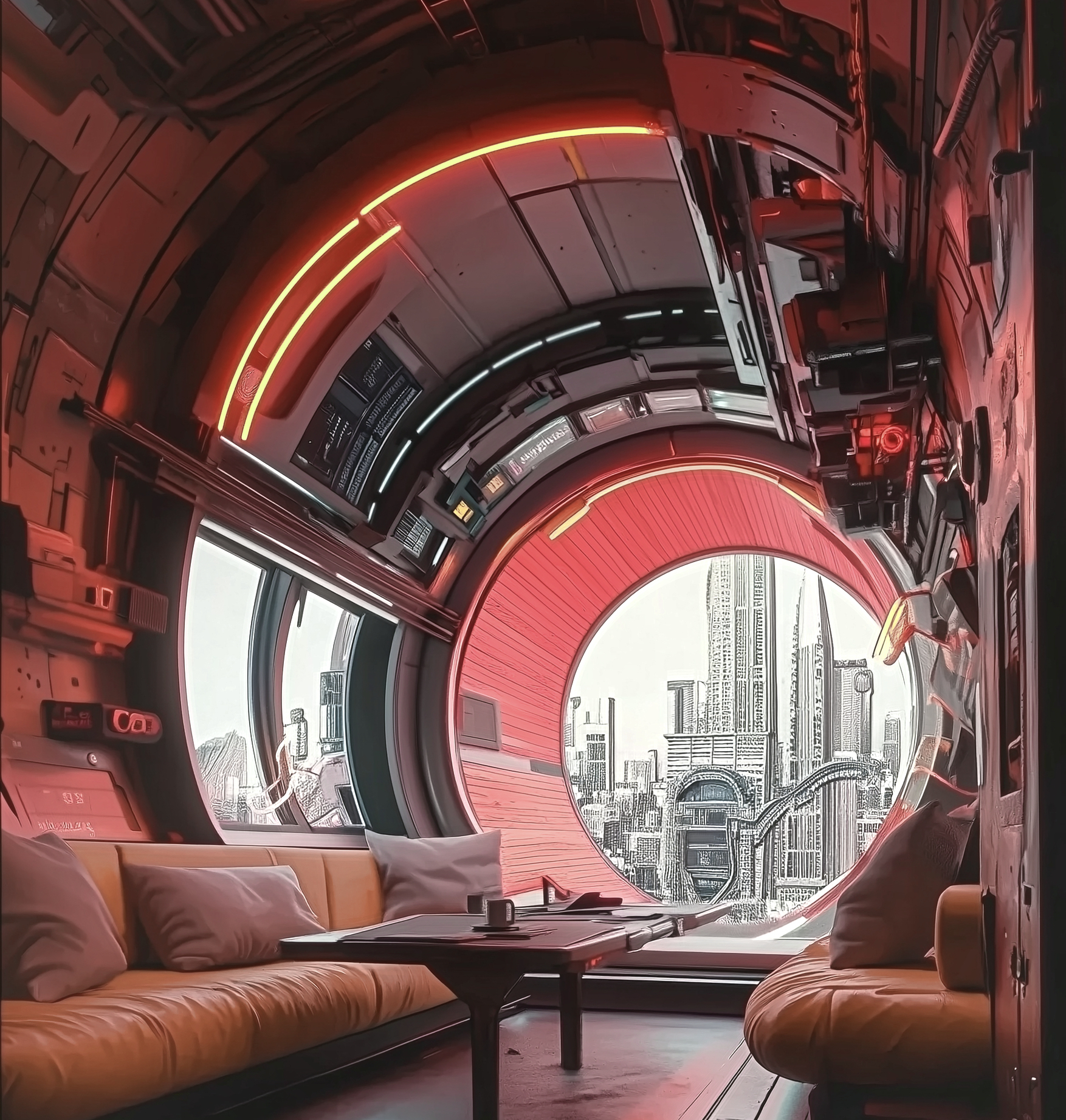
The future of architecture hums quietly on the edge of possibility, where the evolving pulse of technology and the restless transformation of cities hint at a world shaped not by dominance, but by a thoughtful and pragmatic response to dwindling resources. The buildings of tomorrow may not rise as mere expressions of pride, but as manifestations of measured humility—not as monuments to human ambition, but as adaptations—preserving a delicate balance between creation and conservation.

Imagine cities where buildings are assembled with the precision of machines, building materials and components designed for longevity and adaptability. Not just the result of well-funded projects by private entrepreneurs or government institutions, but even the most common housing compounds would fluidly respond to their environment able to be reconfigured, disassembled, reassembled, and improved as seamlessly as updating software. The buildings of the future may be not be static and fragile structures- rather living systems, manufactured with intelligence and efficiency.

Building materials will evolve; the brittle, wasteful nature of concrete and brick may not define the future. The conversation turns inevitably toward circularity—not the mere construction of new forms, but the continuous breakdown and re-formation of materials. Nano-technology, quietly at work, might take what is discarded and return it to a state of possibility, dissolving industrial waste into particles that can be reshaped, strengthened, and given new purpose. Perhaps even concrete, that most stubborn of materials, could learn to heal itself, its cracks knitting together like bone, as though the very act of breaking were just another phase of existence.

Automobiles, products of precision engineering and relentless refinement, have evolved in lockstep with technological progress, embodying the pinnacle of human ingenuity. And yet, the built environment remains stubbornly archaic—an anachronism of brittle, inefficient, and sluggish construction methods. We continue to inhabit structures that, for all their permanence, are astonishingly fragile, their demise written in the face of disaster. Over time, our cities may evolve beyond these relics of obsolescent techniques, especially as modular and prefabricated systems present new possibilities for resilience, adaptability, and efficiency.
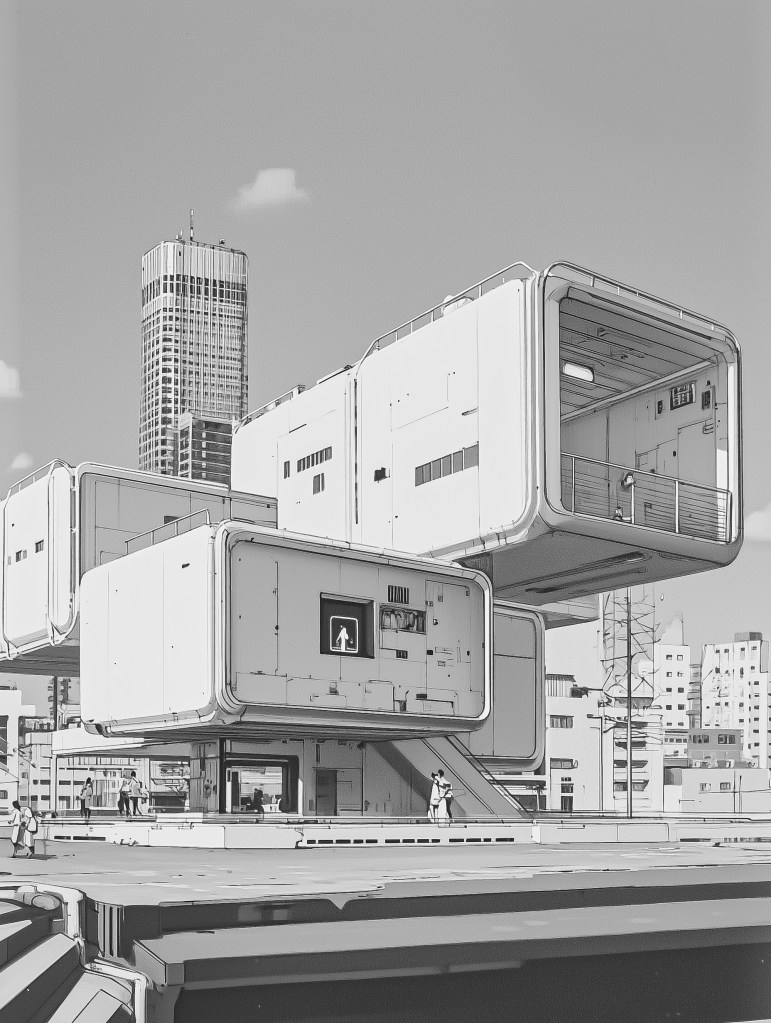
In the near future, the design approach to building shells may shift away from a self-centered attitude that prioritizes excessive distinction and overdesign. Instead, they could emerge from a more collective process, making them more efficient and feasible in terms of affordance. In a world where resources are distributed more fairly, buildings may become active participants in ensuring the safety—and even the survival—of both their occupants and the environment. Rather than embodying humanity’s misguided fate, they could contribute to a more sustainable and resilient future.
Vertical terraces could overflow with plant life, offering shade, natural cooling, and air filtration while cultivating self-sustaining microclimates within the dense urban fabric. This would not be a mere ornamental gesture toward sustainability but an imperative—architecture at last aligning with the urgency of its time.
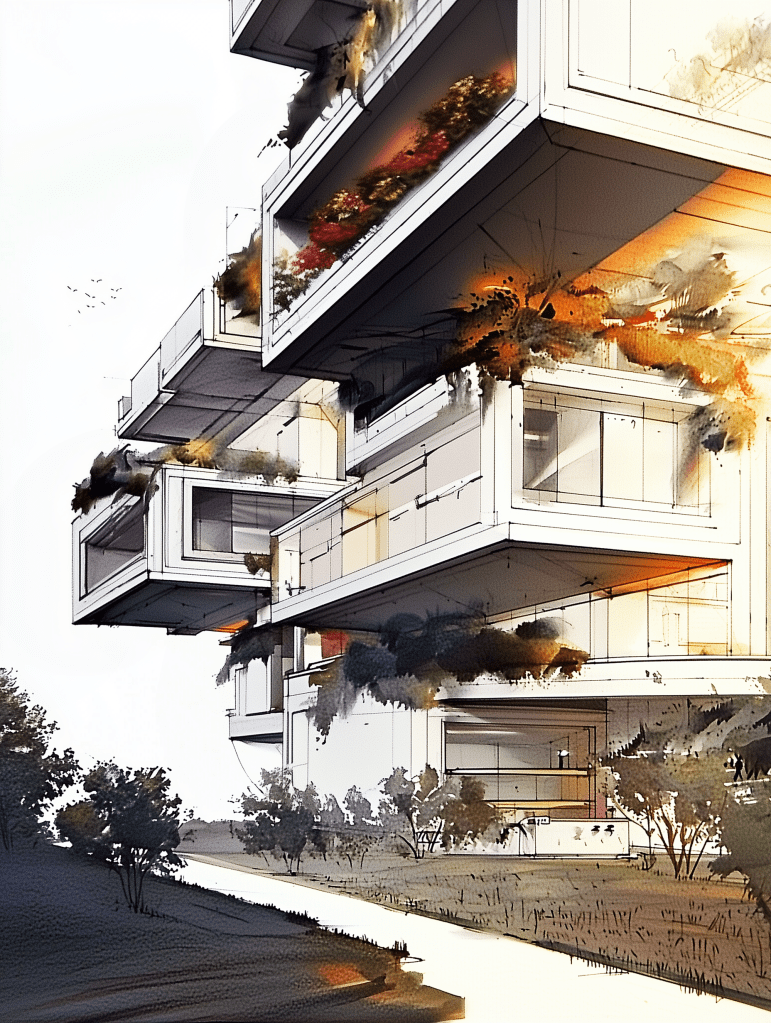
This future, if it comes to be, will not arrive with spectacle. It will emerge quietly and inevitably, shaped by the realities of scarcity and the ingenuity of adaptation. The architecture of tomorrow may not be monumental, but it could be enduring—telling stories not of conquest, but of balance; of spaces designed not merely to stand, but to live, to evolve, and to sustain.
 ARDEAI
Leave a comment