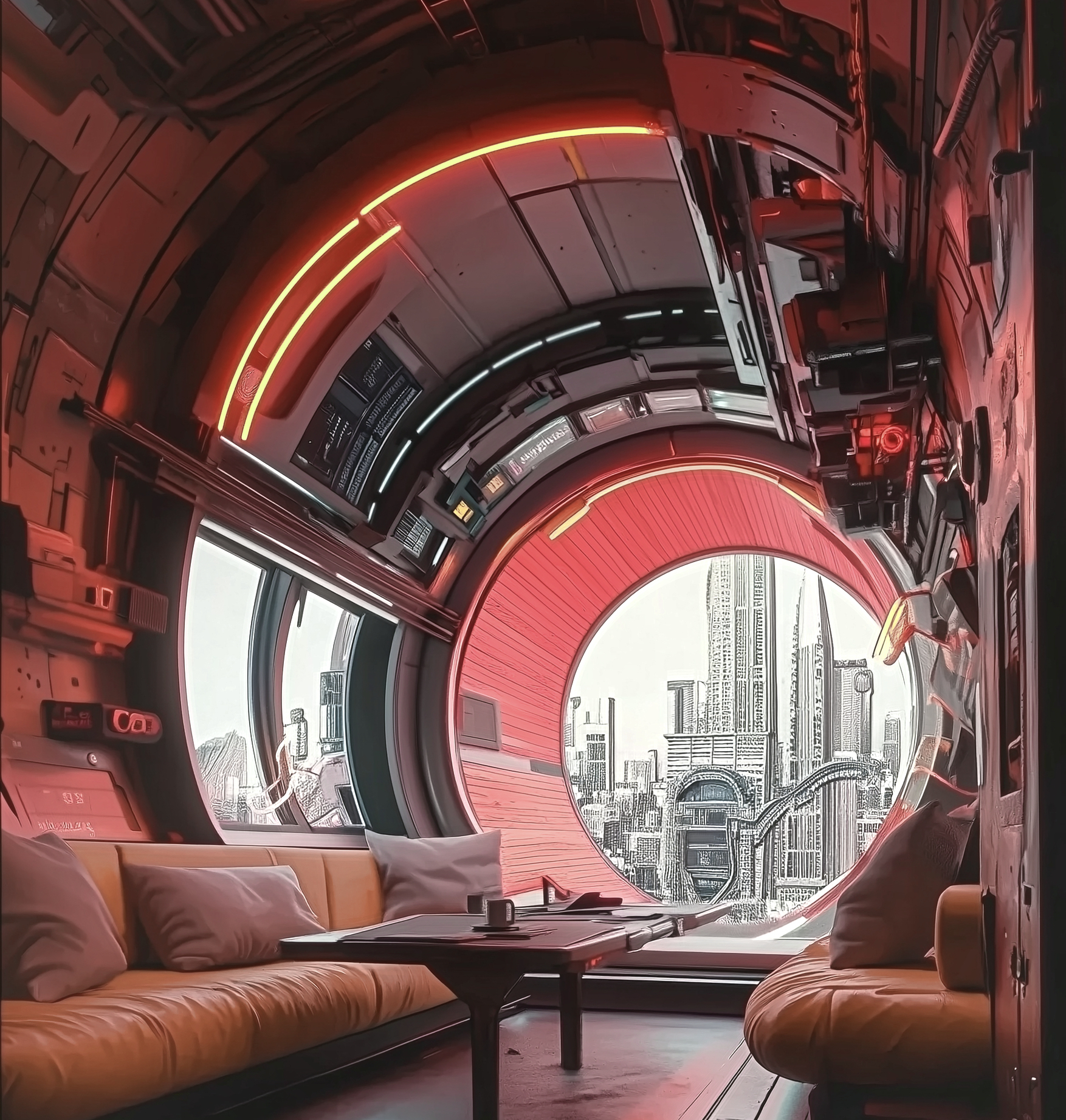
The Rise of the Orb: Semi-Organic Machines and the New Architecture of Flux.
In the emerging cities of the late synthetic era, skylines no longer rise in linear ambition — they breathe, shift, and mutate. The catalyst of this transformation is the advent of autonomous spherical entities: semi-organic, adaptive orbs that blur the boundary between living tissue and constructed environment.
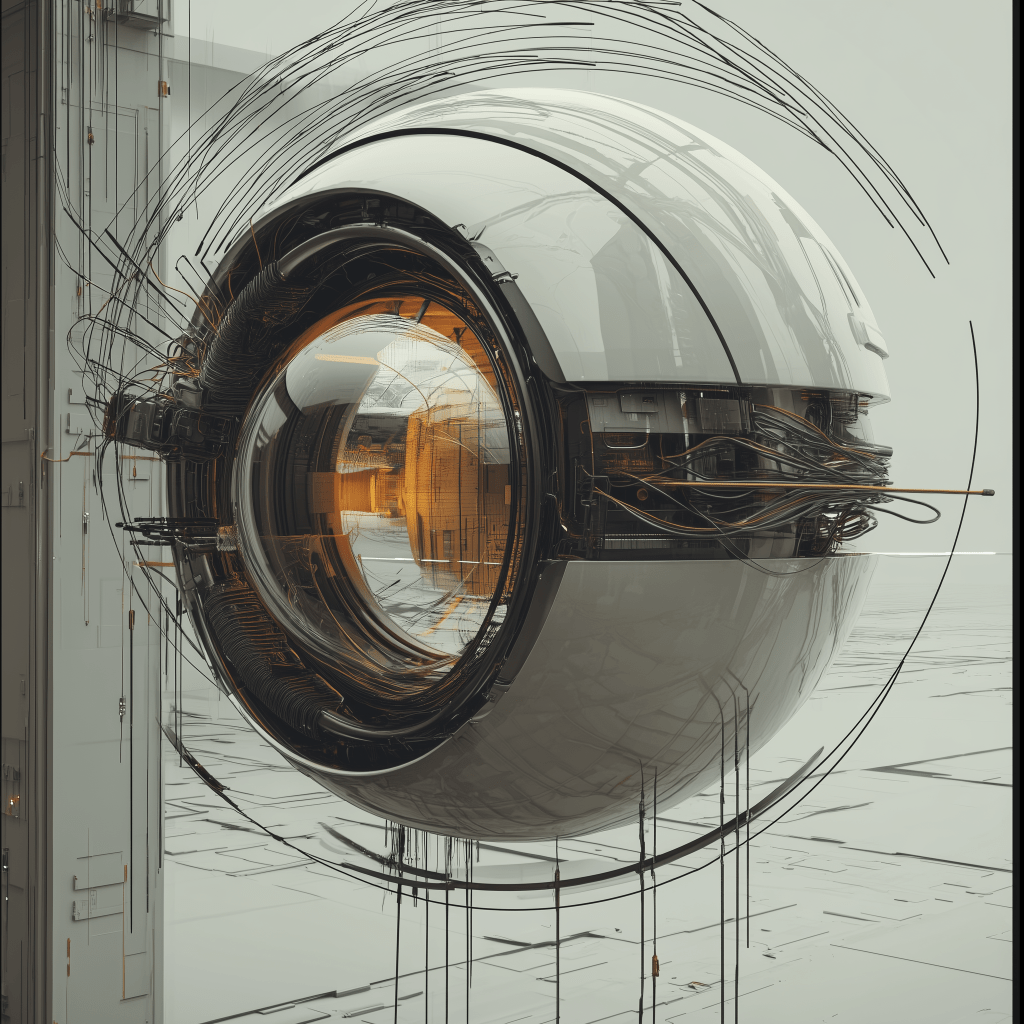
These orbs are not merely devices. They are urban organisms. Engineered with smart alloys braided into bio-fabric membranes, they possess the ability to hover, divide, merge, and anchor themselves seamlessly into the built landscape. Their presence follows a spatial logic more aligned with parasitic symbiosis than traditional construction, reminiscent of the radical spatial experiments once theorized by Lebbeus Woods — yet rendered now with matter that thinks, folds, and heals.

Where they embed, architecture ceases to be fixed.
A disused alley can, within hours, unfurl into a canopy of green co-habitation spaces. Earthquake-fractured towers can be sutured mid-collapse by filaments grown directly from the orbs’ bodies. The urban environment becomes an improvisational ecology — not built once and maintained, but grown continuously, and in negotiation with human, environmental, and machine forces

Networked through a low-latency bio-digital substrate, the orbs form a distributed intelligence: a hive architecture that senses shifts in stress, humidity, population density, even emotional states. Some incarnate as mobile shelters, others as dynamic bridges or vertical farms, shifting their form and function based on real-time conditions. Their transformations are not merely reactive, but anticipatory, as if the city dreams itself forward through their presence.

Urban planning in this context resembles horticulture more than engineering. Designers no longer issue fixed blueprints; they cultivate conditions, implant signals, and allow structures to emerge through orchestrated autonomy. Masterplans dissolve into generative grammars.
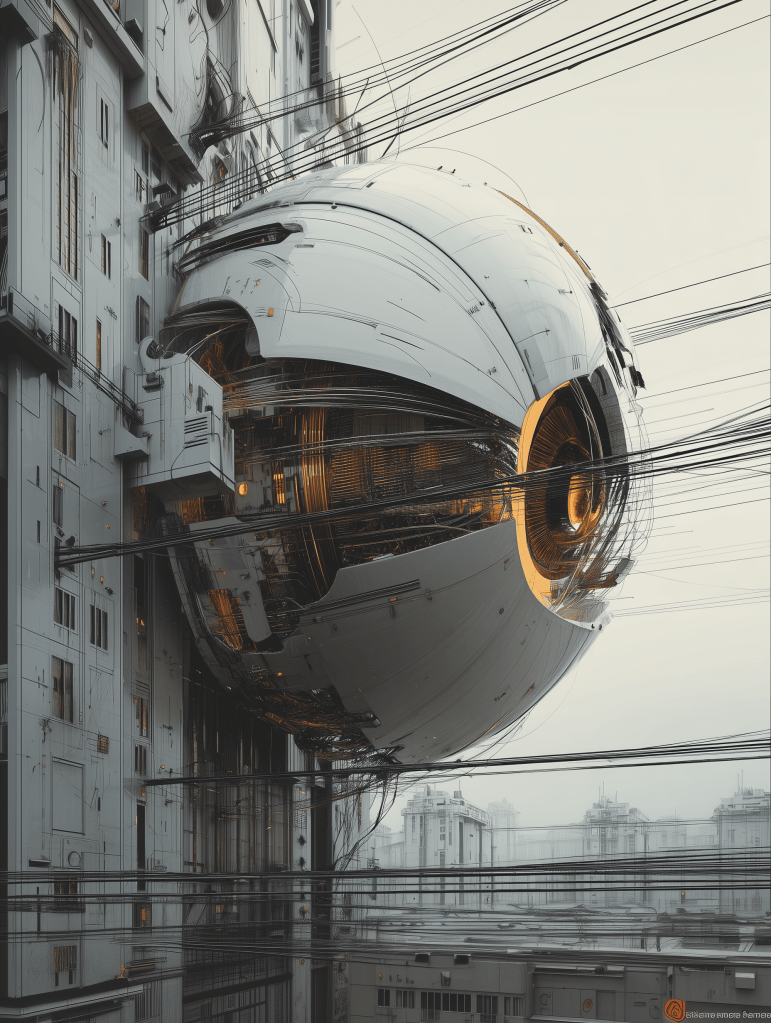
The age of static architecture is over.
In its place: a restless, breathing city — evolving, self-healing, and perpetually unfinished.
 ARDEAI
Leave a comment